Unit 7: Ecology
AQA GCSE Biology Unit 7 common mistakes: ecology marks students often lose
Ecology looks friendly at first: food chains, quadrats, habitats, the usual. Then the exam asks for sampling method, valid conclusions, biomass transfer, and evidence from a graph. The mark scheme still wants precision.
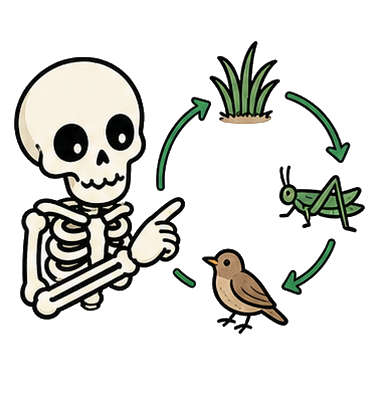
Quick takeaways
- Sampling questions need method, randomness, repeats, and a mean.
- Use abiotic for non-living factors and biotic for living factors.
- Cycle questions need named processes, not "it goes around".
- Biomass and food security questions reward data plus explanation.
Mistake 1: confusing abiotic and biotic factors
Abiotic factors are non-living factors such as light intensity, temperature, moisture, soil pH, wind, and oxygen concentration in water. Biotic factors are living factors such as predators, pathogens, food availability, and competition.
Exam fix
Do not just name the factor. Link it to survival, growth, reproduction, or distribution. "Less light" becomes "less light reduces photosynthesis, so less glucose is made for growth".
AQA evidence
Ecology examiner reports repeatedly show students losing marks by making general environmental points without using the data or method in the question. Quote the evidence first, then explain the Biology.
Mistake 2: vague quadrat answers
Quadrat questions are beautifully predictable in a slightly dull way. Place quadrats randomly, count organisms or estimate percentage cover, repeat many times, calculate a mean, and use the area to estimate population size if needed.
- Random placement reduces bias.
- Many quadrats make the result more reliable.
- A mean smooths out variation between samples.
- A transect is used when you are investigating how distribution changes across an environmental gradient.
Mistake 3: cycles with missing processes
For the carbon cycle, name photosynthesis, feeding, respiration, decomposition, and combustion where relevant. For decay, mention decomposers, enzymes, temperature, oxygen, and moisture if the question points that way.
Do not write "carbon goes into animals" and leave it there. Say plants take in carbon dioxide for photosynthesis, animals gain carbon compounds by feeding, and respiration releases carbon dioxide back to the atmosphere.
Mistake 4: biodiversity answers that sound morally correct but biologically thin
Biodiversity is the variety of different species in an ecosystem. Human activities can reduce it through deforestation, pollution, peat bog destruction, global warming, and land use changes. Conservation answers need specific actions and specific effects.
- Breeding programmes can increase the number of endangered organisms.
- Protected areas reduce habitat destruction.
- Recycling and waste reduction reduce resource extraction and pollution.
- Maintaining peat bogs keeps carbon stored and protects habitats.
Mistake 5: biomass calculations with no working
For biomass transfer efficiency, use the formula given or remembered: efficiency equals biomass transferred divided by biomass available, multiplied by 100. Show working. Your calculator may be correct, but examiners still need to see the method.
Why biomass falls at each trophic level
Not all biomass is eaten, some is lost in waste, and much glucose is used in respiration to transfer energy for movement, keeping warm, and other life processes.
Mistake 6: food security without trade-offs
Food security questions often ask about farming methods, fishing, biotechnology, or environmental impact. Strong answers give the benefit and the drawback. Increasing food production can raise yield, but it may reduce biodiversity, increase pollution, or raise ethical concerns.
Find the matching notes
Want the topic broken down more simply? Use our AQA GCSE Biology revision notes to find the matching topic notes and practise the content in smaller pieces.